Solubility is fundamentally a physical property. When a substance dissolves in a liquid, it undergoes a phase change and mixes uniformly at a molecular level, but its core chemical identity doesn't change. If you dissolve salt in water, you get saltwater; if you evaporate the water, you get the exact same salt back. No chemical bonds were broken permanently to form a new compound.
Yet, student questions and industrial debates often linger because dissolution relies heavily on chemical principles—such as intermolecular forces, bond polarities, and energy exchanges. Let's break down why solubility is classified as physical, how the underlying chemistry works, and where exceptions or edge cases blur the lines.
Why Solubility is a Physical Property
Physical properties can be observed or measured without changing the chemical identity of the sample. Melting point, boiling point, density, and color all fit this description. Solubility shares this exact trait.
When you test how much sugar dissolves in a cup of tea, you're measuring a physical capacity. The sugar molecules (sucrose) disperse evenly throughout the water, but every individual molecule remains intact as C12H22O11. Because you can recover the original solute using standard physical separation methods like evaporation or distillation, no chemical reaction has occurred.
- Reversibility: Solutes can be fully recovered in their original chemical form by removing the solvent.
- No New Substances: The interaction doesn't create new chemical bonds or products.
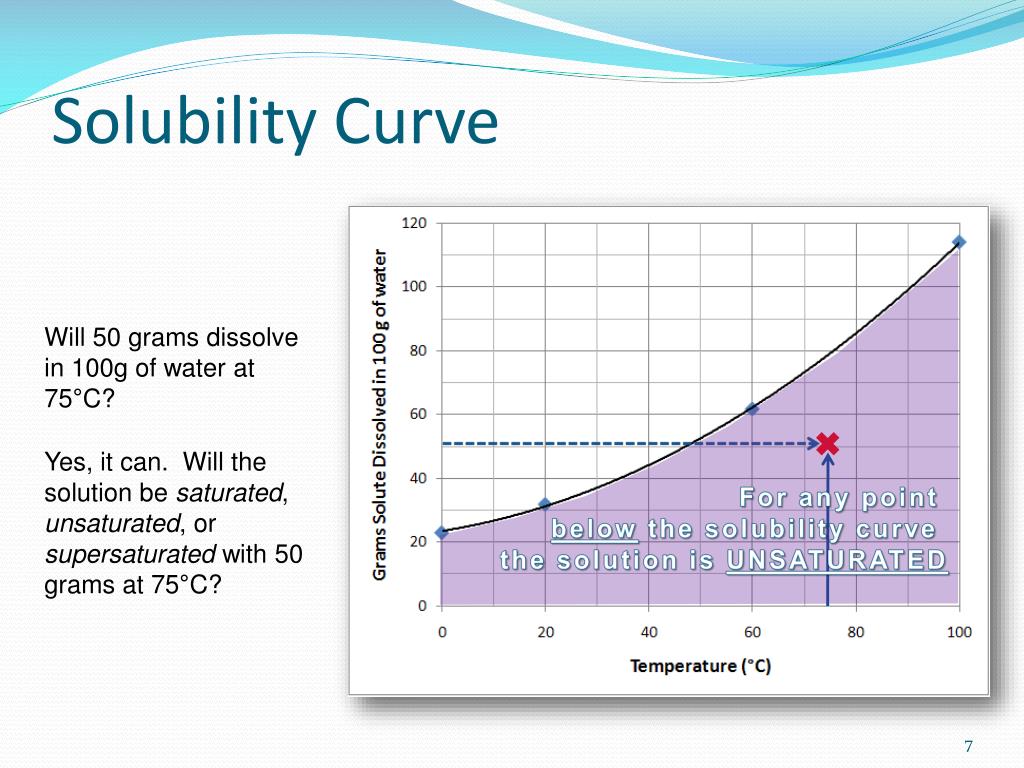
- State Dependence: Solubility varies with physical conditions like temperature and pressure, much like phase changes do.
The Molecular Science of Dissolution
Even though solubility is a physical property, the mechanism of dissolution is driven by chemistry. To understand why some substances dissolve while others don't, we look at how molecules interact with one another.
Intermolecular Forces and Like-Better-Like
The golden rule of solubility is that "like dissolves like." Polar solvents (like water) dissolve polar and ionic solutes because of strong electrostatic attractions.
When you drop sodium chloride into water, the partially positive hydrogen atoms in water molecules pull on negative chloride ions, while the partially negative oxygen atoms pull on positive sodium ions. This process—called hydration—surrounds the ions and pulls them into solution.
Nonpolar solvents, like hexane, cannot form these strong interactions with ions or polar molecules. Instead, they interact via weak London dispersion forces. That's why oil (nonpolar) won't mix in water (polar)—it's not a chemical repulsion, but a physical mismatch of intermolecular forces.
Thermodynamics: Enthalpy and Entropy
Dissolution is governed by thermodynamics, specifically the balance between energy and disorder. The Gibbs free energy equation dictates whether a solute will dissolve spontaneously:
$$\Delta G = \Delta H - T\DeltaS$$
For dissolution to happen, the free energy change ($\Delta G$) must be negative.
- Enthalpy ($\Delta H$): Breaking bonds within the solute and solvent requires energy (endothermic), while forming new solute-solvent interactions releases energy (exothermic).
- Entropy ($\Delta S$): Dissolution almost always increases the system's disorder because tightly packed particles break apart and spread out randomly throughout the volume.
This entropic push is a purely physical phenomenon driven by statistical mechanics. Even if breaking the solute apart requires a net input of heat, the gain in molecular disorder is often enough to make the substance soluble. You can read more about these thermodynamic principles in the LibreTexts Chemistry Guide.
Where the Line Blurs: Chemical Reactions Masking as Solubility
Sometimes, a substance appears to dissolve, but a chemical reaction happens simultaneously. This often confuses students and professionals alike.
Consider the difference between dissolving table salt and dissolving a piece of zinc metal in hydrochloric acid:
- Physical Dissolution: Salt ($NaCl$) in water dissociates into $Na^+$ and $Cl^-$ ions. Evaporate the water, and you get $NaCl$ back.
- Chemical Reaction: Zinc in acid reacts to form zinc chloride and hydrogen gas ($Zn + 2HCl \rightarrow ZnCl_2 + H_2^$). You cannot get the original zinc back by simply evaporating the liquid, because a permanent chemical transformation took place.
However, what about substances like carbon dioxide gas dissolving in water? Part of the dissolved $CO_2$ reacts chemically with water to form carbonic acid ($H_2CO_3$). In scenarios like this, physical dissolution and chemical reaction happen concurrently. Chemists still classify the solubility limit of the gas as a physical property, even though a fraction of the solute undergoes chemical speciation once inside the solvent.
Common Mistakes and Misconceptions
- Mistake: Assuming that because heat is absorbed or released during dissolution, a chemical reaction must be occurring.
- Correction: Physical changes frequently involve energy changes. Melting ice absorbs heat, but it's a physical change. Similarly, dissolving ammonium nitrate drops the temperature sharply, but it remains a purely physical process.
- Mistake: Thinking insoluble substances are chemically inert.
- Correction: Inactive or insoluble materials like silica (sand) have robust covalent networks that water's dipole forces simply can't overcome—this is a structural limitation, not a chemical incompatibility.
- Mistake: Confusing rate of dissolution with solubility.
- Correction: Stirring, crushing, or heating a solute makes it dissolve faster, but it doesn't always change the maximum amount that can dissolve at equilibrium.
Frequently Asked Questions
Does changing temperature make solubility a chemical property?
No. Temperature changes alter the kinetic energy of molecules and shift equilibrium positions, but they do so for physical processes as well. For example, melting point and vapor pressure also shift with temperature without altering chemical identity.
Why do ionic compounds dissolve better in water than covalent compounds?
Water is a polar molecule with a high dielectric constant. It stabilizes charged ions through ion-dipole interactions. Covalent compounds lack full charges, so unless they can form hydrogen bonds with water (like sugar or ethanol), they tend to remain insoluble in aqueous solutions. For a deeper dive into molecular structures, check out the Royal Society of Chemistry.
Is gas solubility governed by the same rules as solid solubility?
Not entirely. While solid solubility usually increases as temperature rises, gas solubility decreases as temperature increases because higher kinetic energy helps gas molecules escape back into the gas phase. This relationship for gases is quantified by Henry's Law, which links solubility directly to partial pressure.
Can an insoluble substance ever become soluble?
Yes, by changing the physical or chemical conditions of the solvent. For instance, altering the pH of water can turn an insoluble metal salt into a soluble ionic form, or adding a surfactant can help bridge polar and nonpolar substances.


