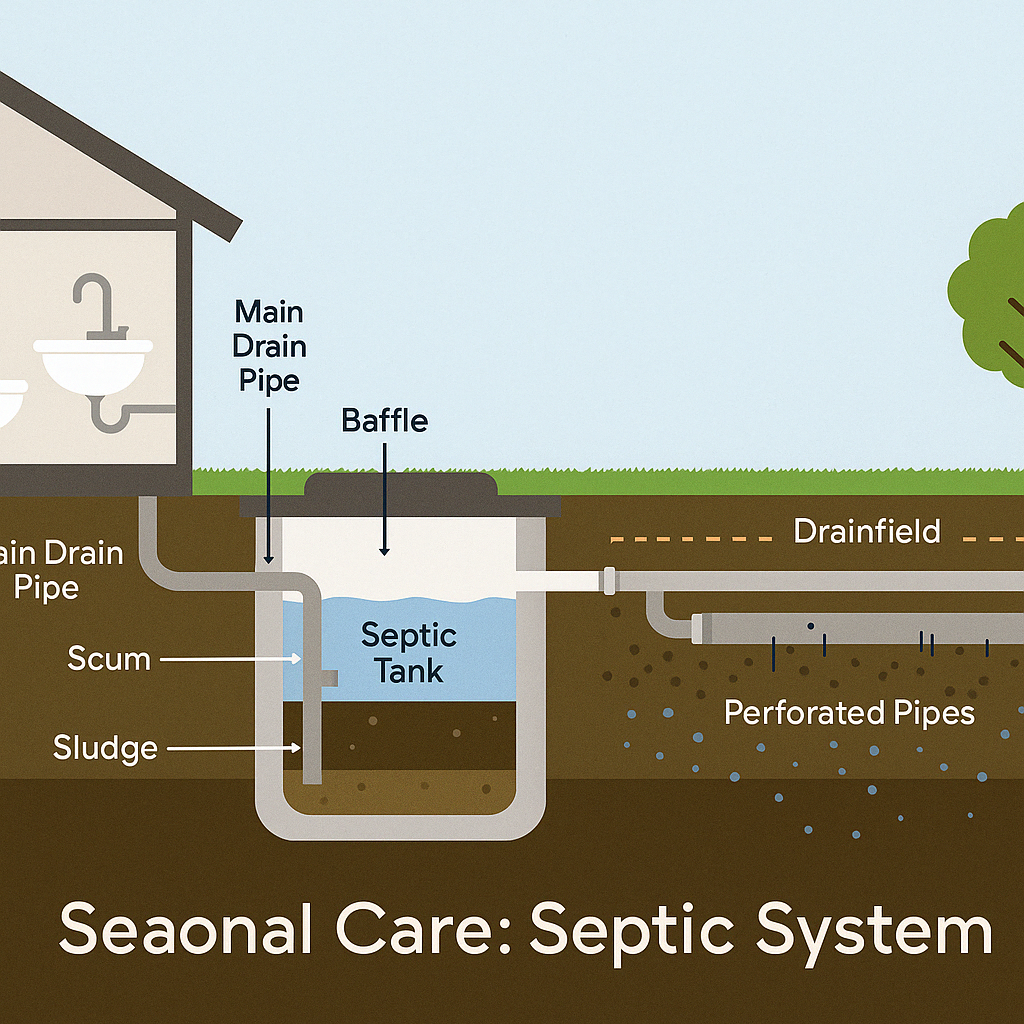
When water backs up into your shower or a foul odor blankets your yard, the culprit is usually your onsite wastewater treatment system. Septic tank repair isn't something you can put off for long, because minor baffle cracks or biomat clogging quickly escalate into total drainfield failure and thousands of dollars in property damage.
Understanding how your onsite sewage system operates helps you catch problems before wastewater surfaces in your lawn. Whether you're dealing with a sluggish drain field, a cracked concrete lid, or root intrusion, knowing the signs, the exact repair procedures, and the maintenance routines keeps your plumbing flowing and your property safe.
Spotting Early Warning Signs of Septic Failure
Septic systems rarely fail without warning. If you know what indicators to look for, you can spot minor issues months before they turn into full-scale household emergencies.
Slow draining fixtures are often the first sign. If your kitchen sink, washing machine, and upstairs bathroom all drain sluggishly at the same time, the issue isn't a localized clog in a single P-trap—it's likely a blocked main line or a full septic tank.
Lush, bright green grass over the drainfield during a dry spell points directly to a failing system. Effluent escaping the pipes acts as a liquid fertilizer, supercharging turf growth right above the lateral lines. If that grass becomes spongy to the step, or if you notice pooling greywater and raw sewage odors around the tank lids or absorption field, the system is hydraulic-overloaded or structurally compromised.
Indoor indicators matter just as much. Gurgling sounds in your plumbing pipes when you flush a toilet or run the dishwasher mean air is trapped because wastewater isn't escaping freely out to the tank.
Diagnosing the Root Cause
Before you dig up your yard or hire a contractor, a systematic diagnostic process pinpoints whether the problem lies in the tank, the distribution box, or the drainfield itself.
First, measure the scum and sludge layers inside the tank using a calibrated sludge judge. If the combined depth of the floating scum and bottom sludge leaves less than twelve inches of clear liquid zone before the outlet baffle, solids are escaping into your drainfield and clogging the soil pores.
Next, inspect the inlet and outlet baffles. Concrete, plastic, or fiberglass tees can corrode, break off, or plug entirely. If the outlet baffle drops off, floating grease and solids flow directly into the absorption pipes, destroying the drainfield within weeks.
Finally, check the distribution box to ensure effluent is splitting evenly across all trenches. If one trench is flooded while others remain bone dry, a settled distribution box or a crushed pipe is forcing all the wastewater into a single section of the yard. You can consult guidelines from the U.S. Environmental Protection Agency for standard inspection protocols and regulatory thresholds.
Common Septic Tank Repairs and Methods
When diagnostics reveal a specific failure point, contractors use several targeted repair techniques depending on the tank material and the nature of the damage.
Structural Tank Repairs
Concrete tanks develop cracks from ground shifting, freeze-thaw cycles, or heavy vehicle loads driving over the yard. For minor, stable cracks, professionals clean the fracture and inject structural epoxy to restore a watertight seal without excavating the entire unit. If the walls are severely degraded or shifting, carbon fiber reinforcement straps or partial collar replacements provide added strength. When a tank is structurally unsound or past its design life—typically thirty to forty years—a full tank replacement is required.
Baffle and Riser Replacements
Broken plastic or concrete baffles must be replaced immediately to prevent solids from escaping the primary chamber. Contractors excavate down to the tank access ports, remove the damaged tee, and install a PVC replacement baffle secured with stainless steel fasteners. Installing grade-level inspection risers during this repair makes future pumping and baffle checks much easier, eliminating the need to dig up your lawn every time maintenance is due.
Drainfield Rejuvenation
If your tank is sound but your drainfield has failed due to biomat buildup—a thick, impermeable layer of organic slime sealing the soil interface—high-pressure water jetting or pneumatic soil fracturing can break up the layer and restore soil permeability. When biological clogging is too severe, installing a secondary alternating drainfield or an aerobic treatment unit upstream can extend the lifespan of your property's wastewater infrastructure.
Preventing Costly Failures
Proactive maintenance costs a fraction of an emergency excavation. You can protect your system and avoid premature failure by following a few strict operational rules.
Pump your tank every three to five years depending on your household size and tank capacity. Letting sludge accumulate past safe limits pushes solids into your drainfield, permanently ruining the soil absorption capacity.
Watch what goes down your drains. Never flush grease, coffee grounds, wet wipes, paper towels, feminine hygiene products, or harsh chemical drain cleaners. Chemical cleaners kill the beneficial anaerobic bacteria that break down organic waste inside the tank, while non-biodegradable solids form mats that clog inlet and outlet pipes.
Manage surface water around your property. Divert roof gutters, sump pump discharges, and surface runoff away from your tank and drainfield. Saturated soil cannot absorb effluent, and excess water forces untreated wastewater to the surface. For detailed advice on soil absorption systems, visit the National Environmental Services Center.
Frequently Asked Questions
How much does a typical septic tank repair cost?
Minor repairs like replacing a broken outlet baffle or sealing a small crack usually cost between three hundred and eight hundred dollars. Major structural repairs, such as replacing a collapsed tank or installing a new drainfield, can range from five thousand to fifteen thousand dollars depending on local soil conditions and excavation requirements.
Can I use store-bought septic tank additives to fix a failing system?
No. Commercial bacterial additives and chemical "miracle cures" cannot clear a clogged drainfield or repair structural cracks. In fact, many chemical additives liquefy solids and push them out into the absorption trenches, accelerating total drainfield failure. Regular pumping is the only proven way to remove accumulated sludge.
How do I locate my septic tank if there are no risers?
If your property lacks visible inspection caps, contractors use electronic locators by feeding a specialized radio transmitter snake down your house plumbing vent or cleanout line, tracing the signal above ground with a receiver to pinpoint the exact location and depth of the tank.
What should I do if raw sewage backs up into my home?
Stop using all water fixtures immediately to prevent further flooding. Contact a licensed septic professional and an emergency water damage restoration company. Wear rubber boots and gloves if you must clean hard surfaces, and avoid contact with the contaminated water until professional remediation is complete.



