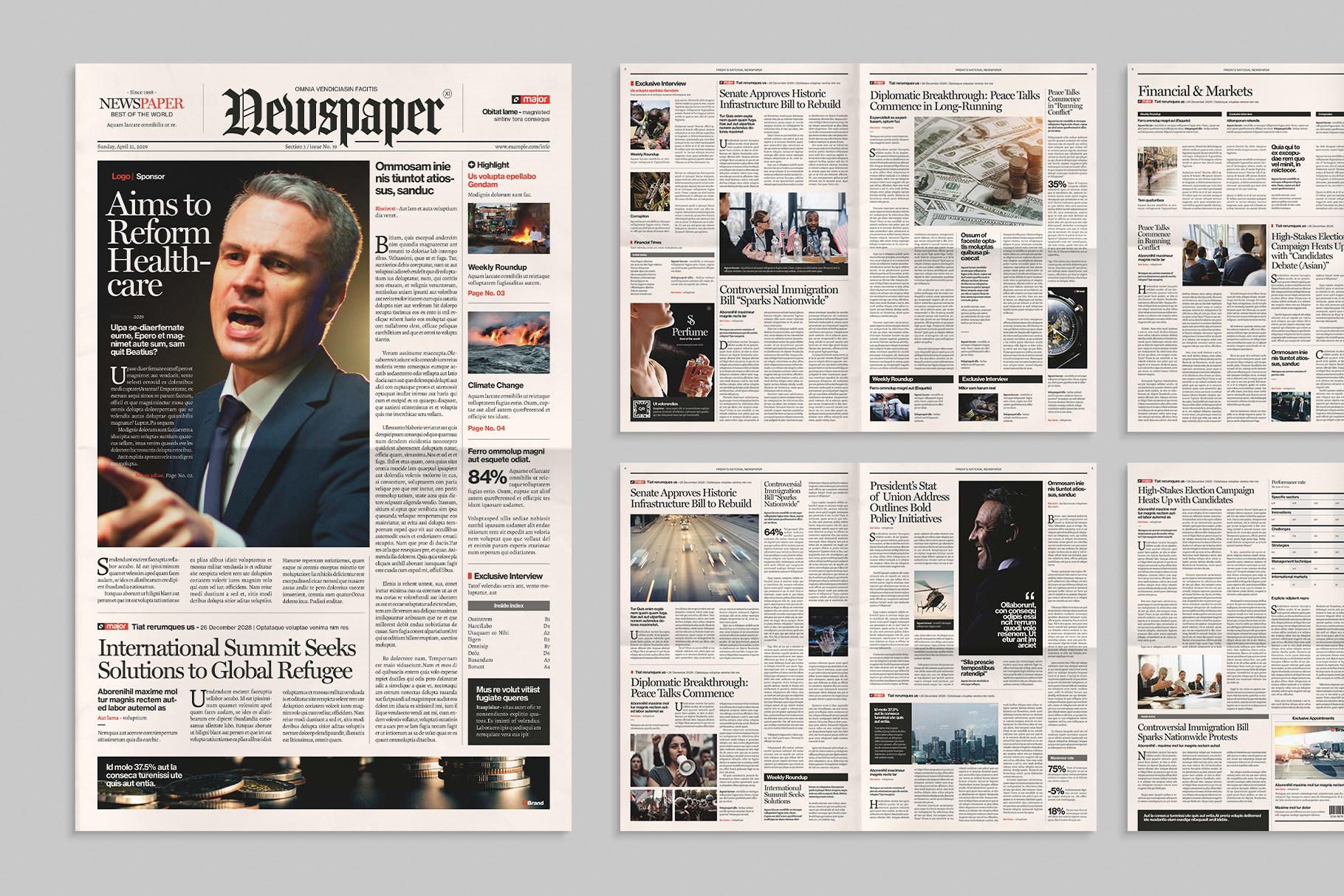
Is newspaper an acronym? No, it's not. Despite viral claims floating around social media that state the word stands for North, East, West, South, Past and Present Events Report, this is a complete internet myth. In reality, words like this evolve organically through centuries of linguistic blending, and they have nothing to do with backronyms or clever abbreviations.
If you've stared at a social media post wondering if you've been living a lie, you aren't alone. These false acronym claims pop up every few years because humans love neat, tidy explanations for messy historical words. Let's break down the actual history, look at why the myth persists, and examine how the terms news and paper genuinely came to be.
The Viral Acronym Myth Explained
The hoax usually appears in a slick graphic or a viral thread. It claims that individual letters in the word represent cardinal directions and journalistic scopes.
- N - North
- E - East
- W - West
- S - South
- P - Past (or Present)
- A - And
- P - Present (or Past)
- E - Events
- R - Report
It sounds clever on the surface. It implies that early printers sat down with a stroke of high-tech genius to invent a portmanteau containing a built-in compass rose.
Linguists call this a backronym—a newly invented acronym assigned to an existing word that was never an abbreviation to begin with. The compass direction theory for news is actually centuries older than social media. According to the Online Etymology Dictionary, variations of this folk etymology date back as early as 1640, when people tried to argue that news stood for information gathered from all four quarters of the compass. People have always enjoyed creative explanations for language, even when they're entirely false.
The Real Etymology of News
To understand why newspaper isn't an acronym, we have to split the compound word into its two distinct parts and look at their historical roots.
The word news didn't drop out of a modern printing press. It developed in the late 14th century as a plural noun meaning "new things". It evolved from the adjective new, heavily influenced by the Old French word nouvelles, which also meant "new things" or "fresh tidings".
In early modern English, translators used nouvelles to render the Medieval Latin word nova (meaning new things) in biblical texts. Over time, English speakers dropped the longer phrasing and kept news.
For a long time, the word was treated as both singular and plural. Speakers didn't think of it as an acronym because acronyms didn't even exist in common linguistic practice during the Middle Ages. The very concept of creating a word out of the initial letters of a phrase is largely a 20th-century phenomenon, especially driven by military and bureaucratic shorthand during and after World War I and II. A 14th-century farmer or merchant didn't have an acronym toolkit.
The History of Paper
The second half of the compound word has an even older lineage that stretches back to ancient civilizations.
The word paper comes directly from the Latin word papyrus, which refers to the tall reed-like marsh plant that ancient Egyptians used to manufacture writing material. The Latin term was borrowed from the ancient Greek word papyros.
When papermaking technology traveled from China through the Islamic world and into Europe, the name followed the material. By the time printing presses emerged in Europe during the 15th century, paper was already a well-established household term for thin sheets pressed from pulped fibers.
When publishers started printing sheets filled with current events, they naturally combined news and paper to describe the physical product. It was a descriptive compound noun, exactly like doorbell, bookshelf, or hairbrush. You don't look at bookshelf and assume it's an acronym for "Bound Objects Organized Kept Safely High Enough Leading For Facts." It's just two words fused together for clarity.
Why Do People Fall for False Etymologies?
It's worth examining why faux acronyms spread like wildfire across platforms like Facebook and TikTok.
Human brains crave patterns. When we look at a complex world filled with arbitrary historical accidents, we prefer order. Finding a hidden code inside a mundane everyday word provides a tiny rush of discovery. It makes you feel like you've unlocked a secret piece of trivia that most people miss.
Furthermore, internet algorithms reward content that triggers surprise or disbelief. A post that says "Everything you know is a lie!" performs much better than a dry linguistic textbook entry explaining Middle English vowel shifts.
Unfortunately, relying on viral graphics for history lessons leads to widespread misinformation. If you repeat the newspaper acronym myth at a dinner party, a linguist will gently correct you.
Common Mistakes to Avoid
When discussing word origins, amateur researchers often fall into a few predictable traps. Steering clear of these pitfalls keeps your arguments historically sound.
- Confusing abbreviations with acronyms: An acronym is pronounced as a word (like NASA or FEMA), while an initialism is spoken letter by letter (like FBI or HTML). Neither applies to compound words like newspaper.
- Trusting unsourced social media graphics: If an etymology graphic doesn't cite a reputable dictionary or a historical corpus, assume it's fiction.
- Ignoring chronological timelines: Words cannot be acronyms if the phrase they supposedly stand for was invented centuries after the base word appeared in print.
Frequently Asked Questions
Is the word NEWS an acronym for North, East, West, South?
No. This is a persistent urban legend. News simply developed from the plural of the adjective new and the Old French word nouvelles.
When was the word newspaper first used?
Compounds containing news and paper began appearing regularly in the 17th century as regular printing press output expanded across Europe and the American colonies.
Are there any real historical acronyms in English from older eras?
Most true acronyms are a modern invention of the 20th century. While Latin scribes used abbreviations and contractions (known as nomina sacra or sigla), they didn't construct modern acronyms out of cardinal directions.
Where can I check word origins accurately?
You can verify etymologies using authoritative linguistic resources like the Merriam-Webster Dictionary or historical databases like the Oxford English Dictionary.



