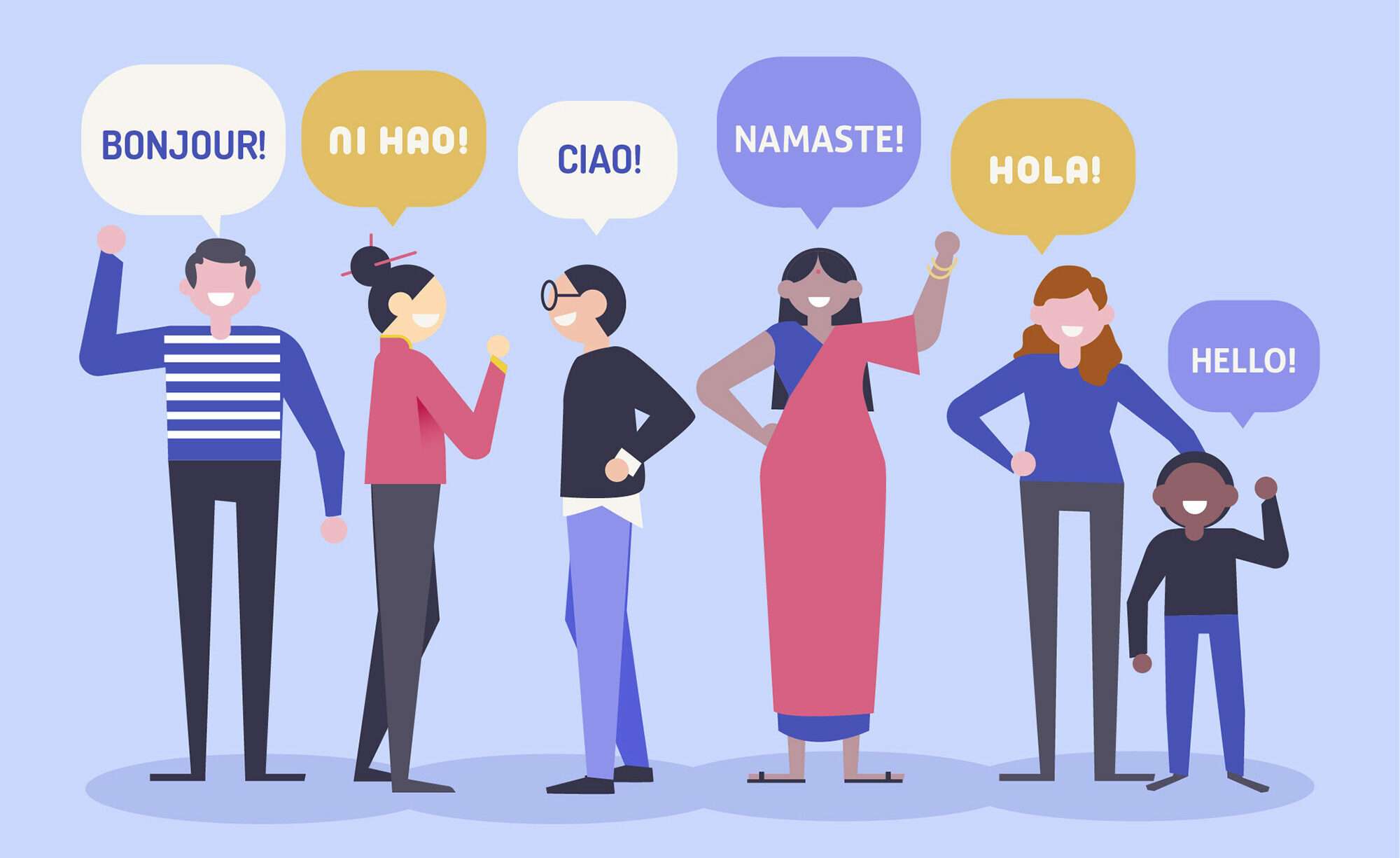
Israel has one of the most vibrant linguistic landscapes in the Middle East. If you walk down a street in Tel Aviv or Jerusalem, you'll hear a dynamic mix of languages reflecting centuries of history, migration, and cultural diversity. Modern Hebrew serves as the primary state and everyday language, spoken by the vast majority of the population. Alongside Hebrew, Arabic is spoken by the country's Arab minority and holds a distinct historical status. Meanwhile, English functions as the primary lingua franca for international business, tourism, and modern commerce, while immigrant languages like Russian and Amharic shape everyday neighborhood life.
Understanding this linguistic mosaic requires looking past simple official titles. Israel doesn't rely on a single tongue; instead, it operates as a multilingual society where different communities navigate public institutions, media, and commerce using a blend of native and adopted languages.
The Dominance and Revival of Modern Hebrew
Modern Hebrew is the core medium of public life, government administration, education, and mass media in Israel. Its status today is remarkable because Hebrew spent centuries primarily as a liturgical and literary tongue rather than a spoken vernacular.
The revival of Hebrew in the late 19th and early 20th centuries—championed heavily by lexicographer Eliezer Ben-Yehuda—transformed an ancient language into a modern, functioning daily vocabulary. When the state was established in 1948, Hebrew became the natural unifier for Jewish immigrants arriving from dozens of different linguistic backgrounds across Europe, North Africa, and the Middle East.
- Education: Schools across the country teach core curricula in Hebrew from early childhood, ensuring high native proficiency.
- Immigrant Integration: New citizens, known as olim, learn Hebrew through state-subsidized intensive language schools called ulpanim to secure employment and integrate smoothly.
- Public Sphere: Street signs, official documents, legal proceedings, and judicial courts operate primarily in Hebrew.
The Vital Role of Arabic
Arabic is deeply rooted in the region and represents the native tongue of Israel's Arab citizens, who comprise roughly one-fifth of the population. Spoken Arabic in Israel is predominantly a Levantine dialect, though Modern Standard Arabic is used in formal literature, news broadcasts, and educational institutions within the Arab school system.
While Arabic historically held a formal co-official status alongside Hebrew, legislation adjusted its standing to a special cultural status. In practice, Arabic remains visible and active across daily life:
- Multilingual Signage: Road signs, public transit notices, and government notices frequently feature Hebrew, Arabic, and English.
- Community Infrastructure: Arabic-language newspapers, radio stations, and local municipal services serve Arabic-speaking towns and neighborhoods.
- Cross-Cultural Fluency: A significant portion of Jewish Israelis study Arabic in school, and many Arab citizens are highly proficient in Hebrew, creating a continuous bridge between the two populations.
English as the Practical Lingua Franca of Modern Society
Although English is not an indigenous or official language of the state, its footprint is massive. English functions as the actual lingua franca for international trade, high-tech industry, academic research, and global tourism.
You'll find that most younger Israelis, university graduates, and urban professionals speak conversational or fluent English. Key sectors rely on it entirely:
- High-Tech and Business: Israel's booming startup ecosystem conducts a large share of its corporate communications, venture funding pitches, and software documentation in English.
- Media and Entertainment: International films, streaming content, and internet platforms heavily feature English, making it second nature for digital natives.
- Higher Education: Universities frequently source English-language textbooks, publish academic papers in international journals, and host foreign exchange programs.
Immigrant Languages Shaping Neighborhoods
Mass migration waves over the past century brought unique linguistic pockets that persist across generations. These communities maintain newspapers, cultural centers, and social networks in their native tongues.
- Russian: Following the collapse of the Soviet Union in the 1990s, nearly one million Russian-speaking immigrants arrived. Russian remains the most widely spoken non-official immigrant language, visible in dedicated grocery stores, television channels, and community newspapers.
- Amharic: Spoken by members of the Ethiopian Jewish community, Amharic is heard across community organizations, religious institutions, and specific municipal support programs.
- French and Yiddish: French is spoken by immigrants from France and North Africa, while Yiddish is preserved and spoken daily within ultra-Orthodox (Hasidic) communities.
You can explore more about global linguistic trends and language preservation through resources like Ethnologue or global demographic datasets hosted by organizations like the UN Statistics Division.
Common Mistakes to Avoid When Analyzing Israeli Linguistics
When discussing the languages of Israel, observers often fall into a few predictable traps. Recognizing these nuances prevents inaccurate generalizations.
- Assuming English is Official: Many visitors assume English shares official status because it appears on road signs and corporate websites. In reality, it is a heavily utilized foreign language.
- Treating Arabic as a Monolith: Observers sometimes view Arabic as uniform, ignoring the distinct variations between spoken Levantine dialects, Bedouin dialects, and formal Modern Standard Arabic.
- Overlooking Multilingual Competence: It's a mistake to view Israel's groups as entirely monolingual; a large percentage of the population switches effortlessly between Hebrew, English, and their native family tongue depending on the setting.
Frequently Asked Questions
Is English enough to get around as a tourist in Israel?
Yes. Most hotel staff, taxi drivers, waiters, and shopkeepers in major cities like Tel Aviv and Jerusalem speak conversational or fluent English. You can easily navigate transit and menus without speaking Hebrew.
Do Israeli Arabs speak Hebrew?
The vast majority of Arab citizens in Israel speak and understand Hebrew fluently, using it daily for employment, higher education, and cross-cultural commerce, while maintaining Arabic as their primary home language.
What is the most common foreign language spoken in Israel?
Russian is the most widely spoken non-official native immigrant language, driven by massive arrivals from the former Soviet Union during the late 20th century.
How long does it take immigrants to learn Hebrew?
New immigrants typically attend an intensive government-supported ulpan for five months. While this provides a solid foundation for daily survival and basic work, achieving full professional fluency usually takes a few years of active immersion.